
Cruise Blog
Subscribe to our Blog
Time for Lander Operations
Hey Everyone,
My name is Lewis Truckel and I’m an undergraduate researcher with Dr. Andrew Davies’ Marine Ecology and Technology Lab (marecotec) at The University of Rhode Island. This is my first cruise ever, and I’m excited to share our progress with you so far!
Dr. Davies and I arrived in Gulfport early on Monday morning, July 27th, where we got straight to work on our lander WALL-E, fitting instruments and getting it ready for deployment. We always have to arrive early, as the lander is a complex instrument with many different sensors and attachments.
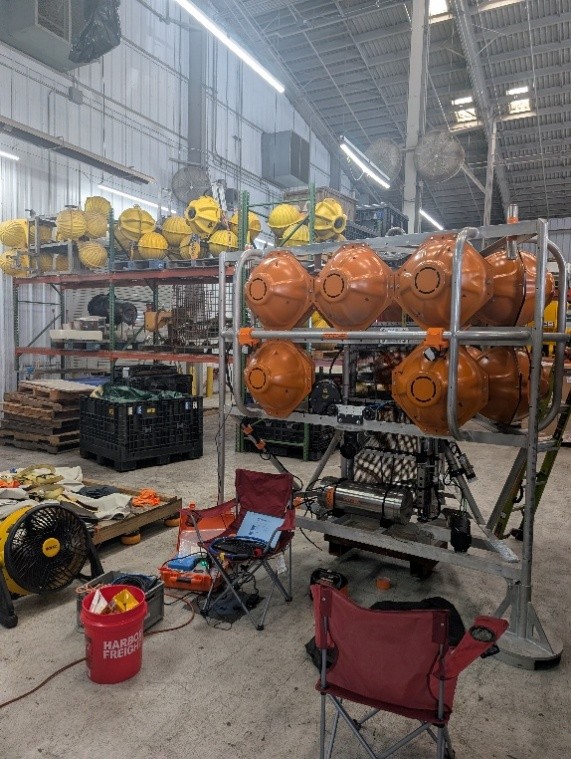
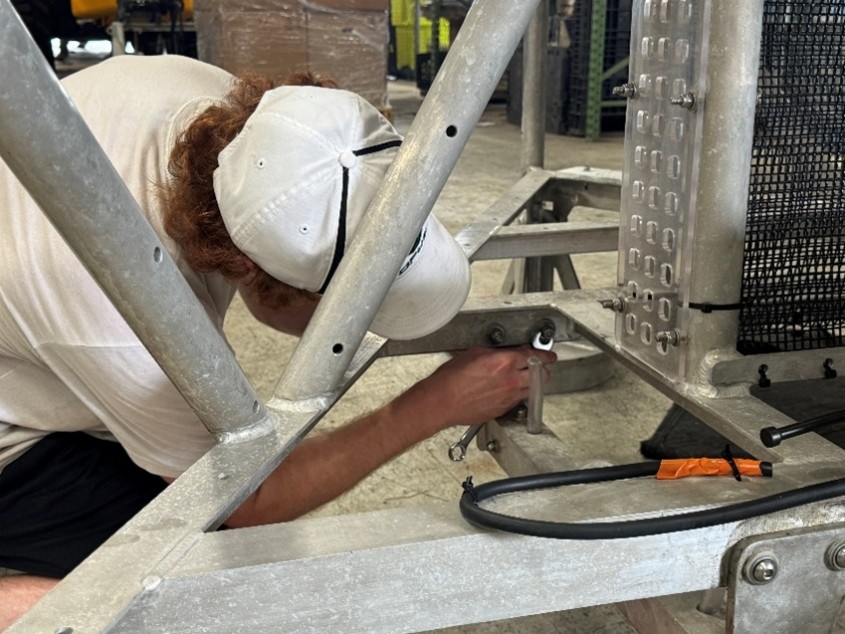
Lander work in the USM Marine Research Center warehouse; Photos L.T.
After 2 days of preparation, we ran into a slight mishap during our move of the lander to the ship, resulting in severe damage to one of the lander’s feet. Our original plan was to leave port on Wednesday night, but due to our unfortunate circumstance, we pushed departure back to Thursday night, so we would have time for the bent portion of the lander frame to be cut off, and a new section welded on.
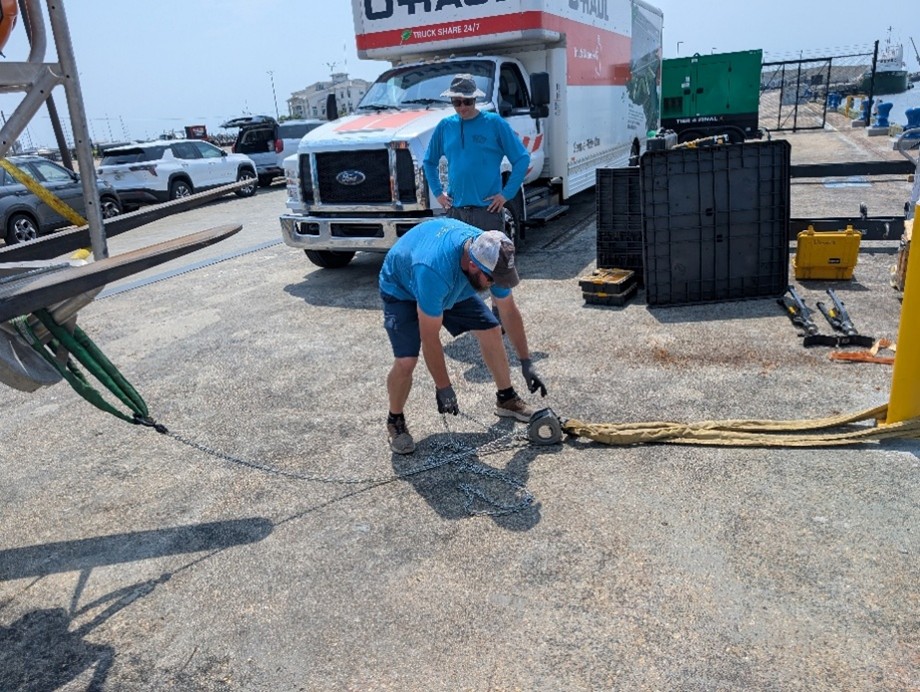
Valiant effort by Captain J.D. to bend the foot back into place; Dr. Davies in shock in the background. Photo: L.T.
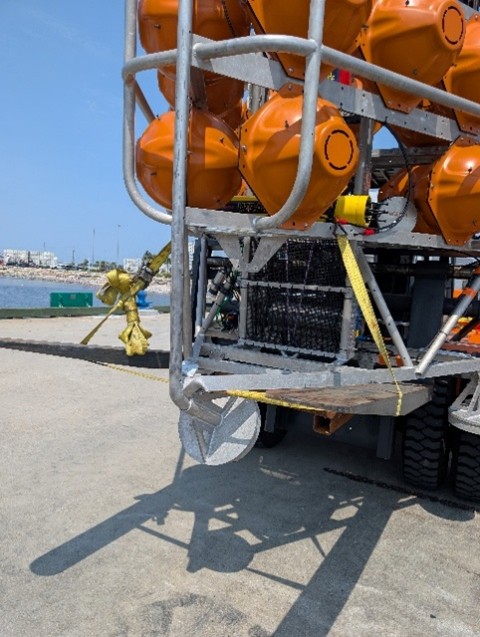
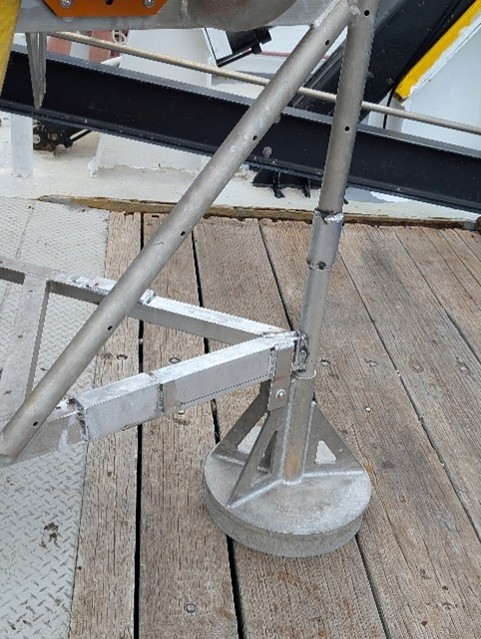
Lander foot before vs. Lander foot after; Photos: L.T.
That being said, after an amazing effort by a welder that the ship organized, we were able to fix it and the lander was brought aboard!
And, the best news of all? We just deployed WALL-E at Shepard Mound this morning and everything seems to be working as planned so far. We will be retrieving it Tuesday!
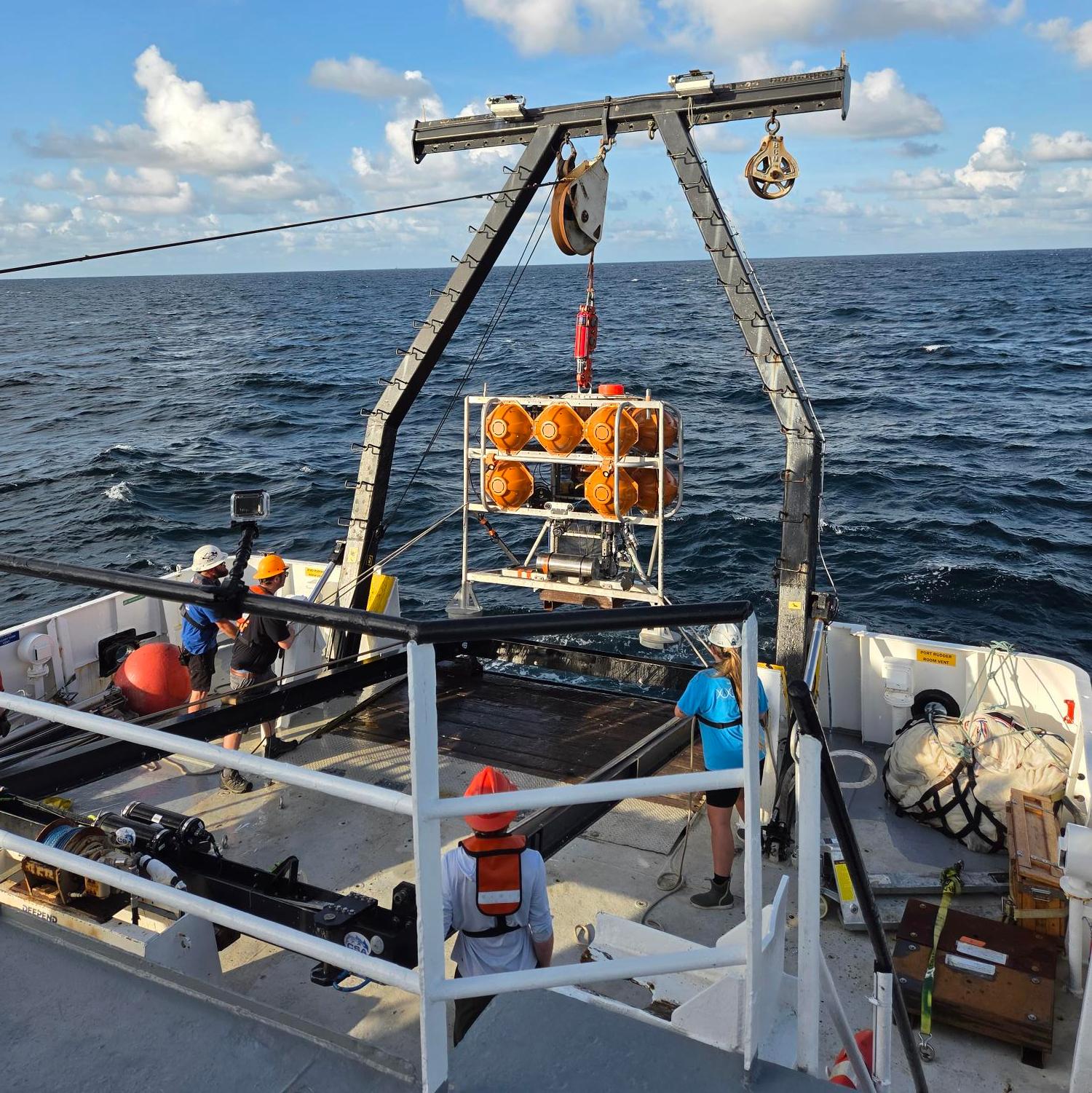
WALL-E heading to the deep! Photo: H.Judkins
What is this Lander all about?
The lander is instrumented with a variety of different state of the art sensors. We have a multiparameter sensor known as a CTD (conductivity, temperature, depth) that will measure water temperature, salinity, oxygen and pressure, with an auxiliary sensor that measures turbidity and chlorophyll. We also have an acoustic doppler current profiler (ADCP for short), which measures currents above the lander, giving us valuable information on velocity and direction. Supplementing this is a similar active acoustic instrument to what we use from the ship (but this time looking upwards from the seafloor) that looks to capture patterns in the vertical movement of fish. We also have a passive acoustic hydrophone on the lander that will record sounds, some of which may be made by fish.
Specially for this trip, the lab has been developing a new camera system known as a stereocam. This is connected to our main deep-sea camera, so we will be able to take amazing pictures and videos of the site where the lander is deployed, as well as measure any objects of interest. Over the duration of this research cruise, we’re hoping to do 3 short deployments, so we’ll be able to get a great snapshot of Shepard’s Mound with some high frequency data.
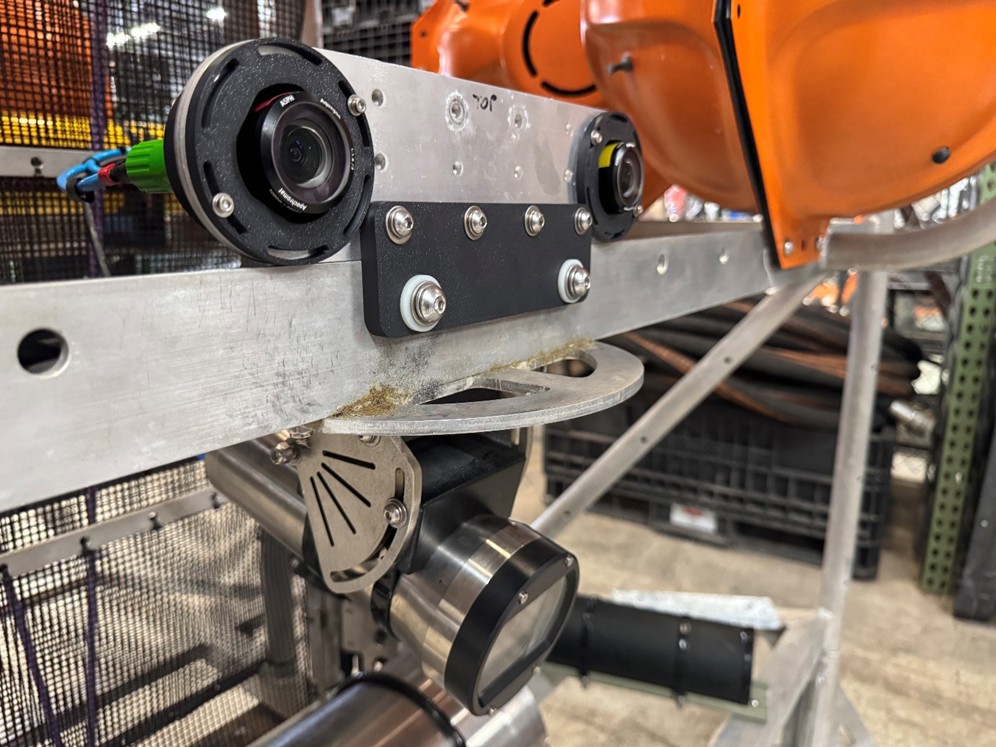
Brand new stereocam; Photo L.T.
I’m excited to be here and excited to keep you all updated!
-Lewis Truckel, URI Marine Biology and Fisheries ‘29

- 8000 N Ocean Drive
- Dania Beach, FL 33311
- 954-262-3600
- admin@deependconsortium.org