
Cruise Blog
Subscribe to our Blog
A Look Behind the Scenes: Life Aboard a Research Vessel
Hello, DEEPEND blog readers!
At the request of the science party, I was asked to write a little about ships and all their glory. There are countless types of vessels working on the water everyday. Today, though, I’d like to focus on one of my favorites: research vessels.
My name is JD Ellington, and I’ve been a captain for about 20 years. For the last three years, I’ve had the privilege of serving as Master of the R/V Point Sur. She’s a regional-class research vessel with a long and interesting history. Built in 1981 by Atlantic Marine as the Cape Florida for the University of Miami, she later found a new home with Moss Landing Marine Laboratories in California, where she was renamed Point Sur. In 2015, ownership transferred to the University of Southern Mississippi, and through a partnership with LUMCON, she has been crewed and operated in support of marine science ever since. She also has a sister ship, the Cape Hatteras, operated by Cape Fear Community College.
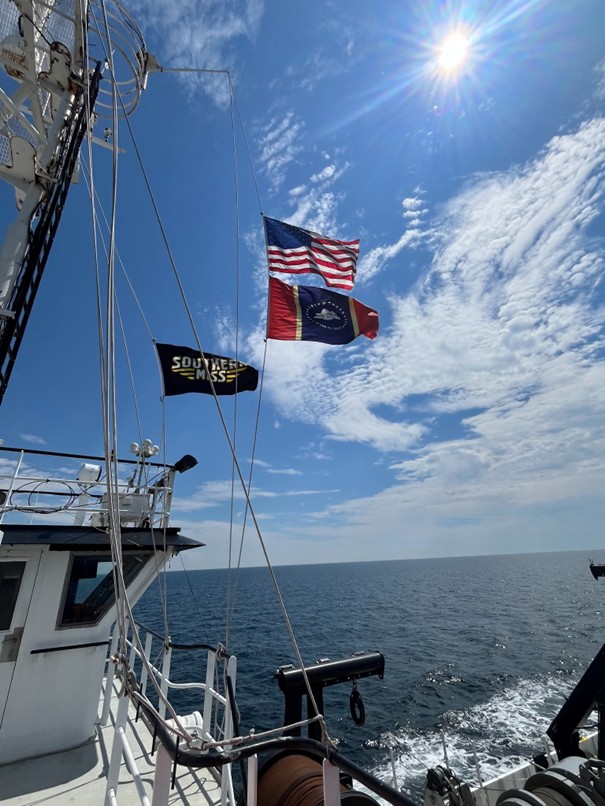
Underway aboard R/V Point Sur.
Research vessels come in many different shapes and sizes. There are coastal, regional, ocean-class, global-class, polar, fisheries, naval, and seismic research vessels, just to name a few. While they may look different and serve different missions, they all share one common purpose: collecting data that helps us better understand our oceans and waterways.
Many research vessels are true multi-purpose platforms. On any given cruise, they might collect sediment samples from the seafloor, tow trawl nets, deploy oceanographic instruments, recover moorings, map the seabed, or launch remotely operated equipment. I often think of these vessels as the pickup trucks of the research fleet—they’re built to handle a little bit of everything. Other vessels are designed for very specialized work, such as breaking through polar ice, conducting seismic surveys beneath the seafloor, or supporting fisheries management.
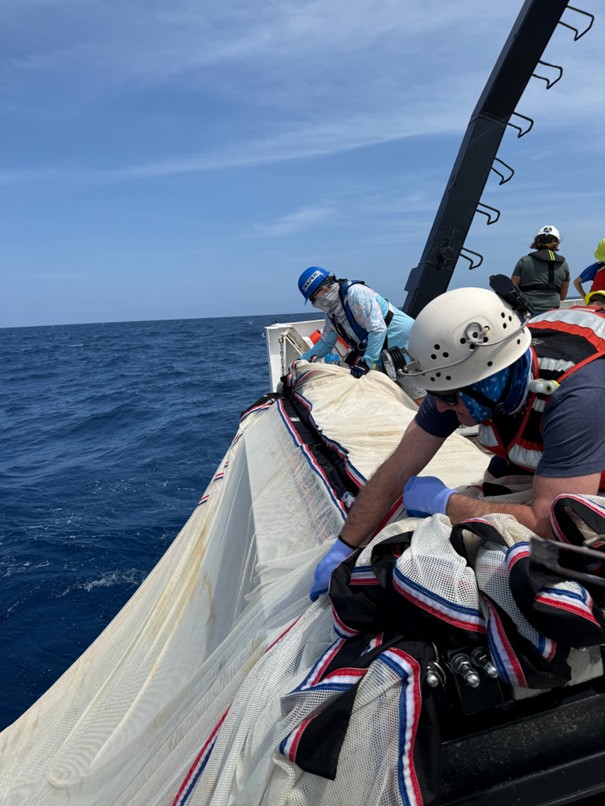
The DEEPEND science party recovering the MOCNESS sampling system.
Supporting all of these different scientific missions requires a crew with a broad range of skills. Every operation is different, and every deployment presents its own unique challenges. Precision vessel handling, equipment maintenance, weather planning, and teamwork all play an important role in making sure the science can happen safely and successfully. It’s challenging work, but it’s also incredibly rewarding. The data collected during a cruise often contributes to research that would simply not be possible without the vessel and the people operating her.
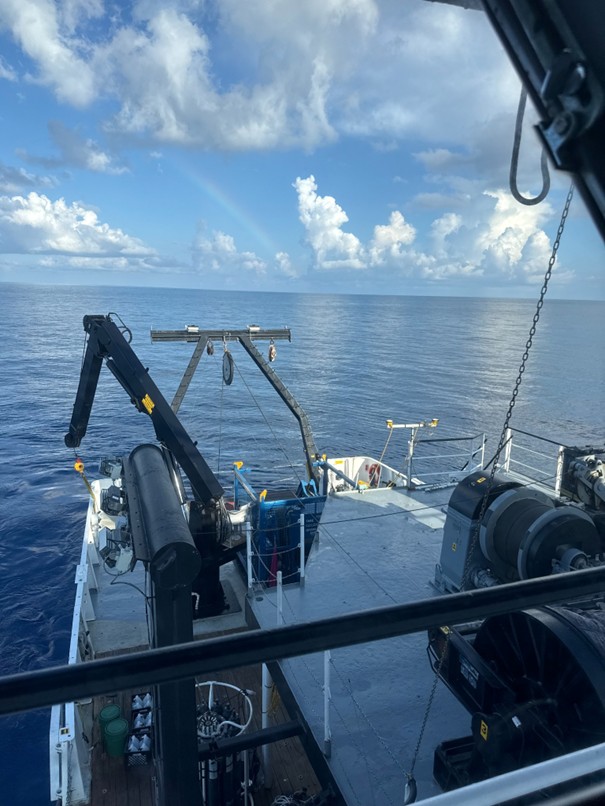
A calm day on station in the Gulf.
One thing that many people don’t realize is that the ship itself is only part of the equation. The real heart of any research vessel is its crew.
The deckhand keeps the decks organized, safe, and ready for the next operation. The engineers work tirelessly behind the scenes to keep every system running—from the propulsion engines to the generators, hydraulics, freshwater systems, and numerous pieces of machinery that most people never notice unless they stop working. Then there’s the chef, who somehow manages to turn a rolling galley into one of everyone’s favorite places on the ship. After a long day on deck, a great meal can do wonders for morale.
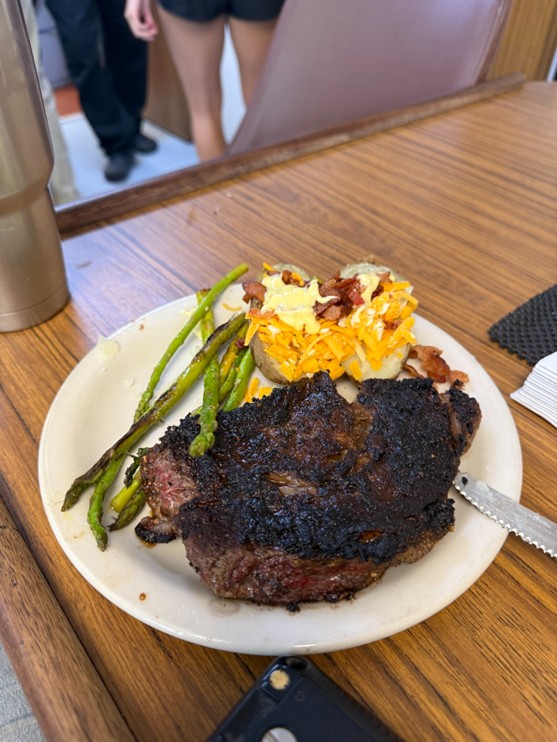
Good food goes a long way after a busy day on deck.
One crew member who often goes unnoticed is the marine technician. They occupy a unique role, bridging the gap between the scientific party and the ship's crew. They understand the scientific objectives of the cruise and translate those needs into the practical operations required onboard. Whether it's preparing complex sampling equipment, coordinating instrument deployments, troubleshooting electronics, or helping the bridge and deck crew understand exactly what a particular operation requires, the marine technician keeps everyone working toward the same goal. They're part scientist, part mariner, and often the only person onboard who truly understands how to operate and repair the sophisticated scientific equipment that makes modern ocean research possible.
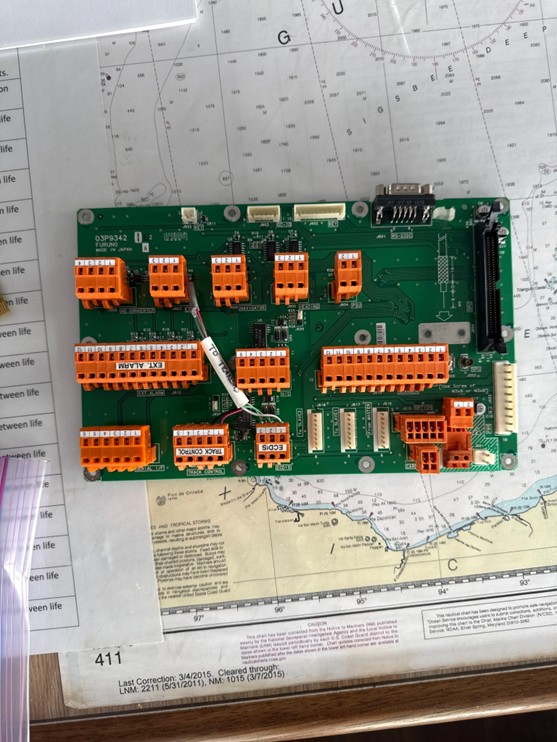
Modern research vessels depend on sophisticated electronics.
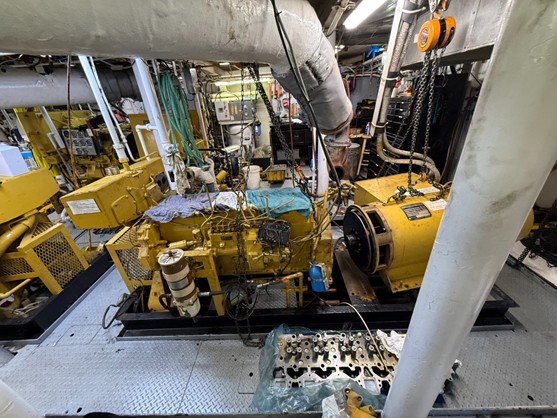
Engine room maintenance keeps the ship operating reliably.
Together, every member of the crew plays an essential role. While each job is different, they all have one common purpose: safely supporting science and making every cruise as successful as possible.
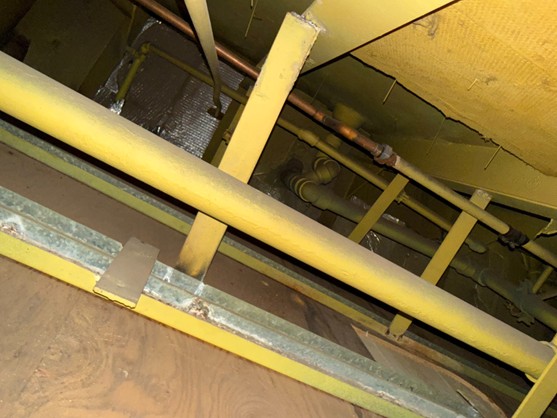
Behind the scenes, countless systems keep the vessel functioning.
A research vessel is really its own small floating community. Once we leave the dock, we have to produce our own electricity, make our own fresh water, manage our waste, navigate safely through changing weather, and keep everyone fed and comfortable—all while supporting complex scientific operations around the clock. Every person onboard has an important role, and success depends on everyone working together.
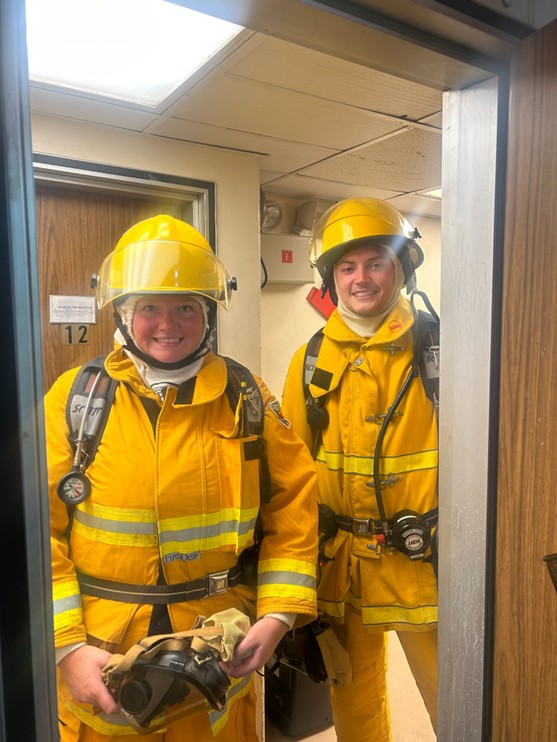
Routine firefighting drills help ensure the crew is prepared for emergencies.
So the next time you step aboard a research vessel or follow along with a scientific expedition, remember that there’s much more happening than what you see on deck. Behind every successful sample, instrument deployment, or discovery is a crew working together to safely operate what is essentially a small island at sea. It’s a unique profession, and I’m grateful to play a small part in helping science explore and better understand our oceans.
Until next time, fair winds and following seas.

- 8000 N Ocean Drive
- Dania Beach, FL 33311
- 954-262-3600
- admin@deependconsortium.org