
Cruise Blog
Subscribe to our Blog
Having a BALL with eDNA on DSB3!
Hi everyone, it’s Nina checking in from the Deep-sea Benefits 3 (DSB3) cruise aboard the R/V Point Sur! I am a graduate student in the Crustomics Lab at Florida International University using environmental DNA (eDNA) to explore patterns of biodiversity in the Gulf.
On last year’s cruise, I introduced the newest member of the DSB fleet of sampling equipment, the eDNA Multipuffer. This machine allows us to autonomously filter hundreds of liters of water at discrete depths. We use the Multipuffer on the CTD rosette with the Wideband Autonomous Transceiver (WBAT) and use shipboard acoustics to target sampling within dense aggregations of marine animals within the water column called deep-scattering layers. Once we get back to land, we can extract the DNA trapped and preserved on these filters and use an approach called metabarcoding to detect which organisms may have been present within the water column. It’s a bit like being a deep-sea detective, using clues [genetic material] left behind in the water column to try and piece together presence and patterns.
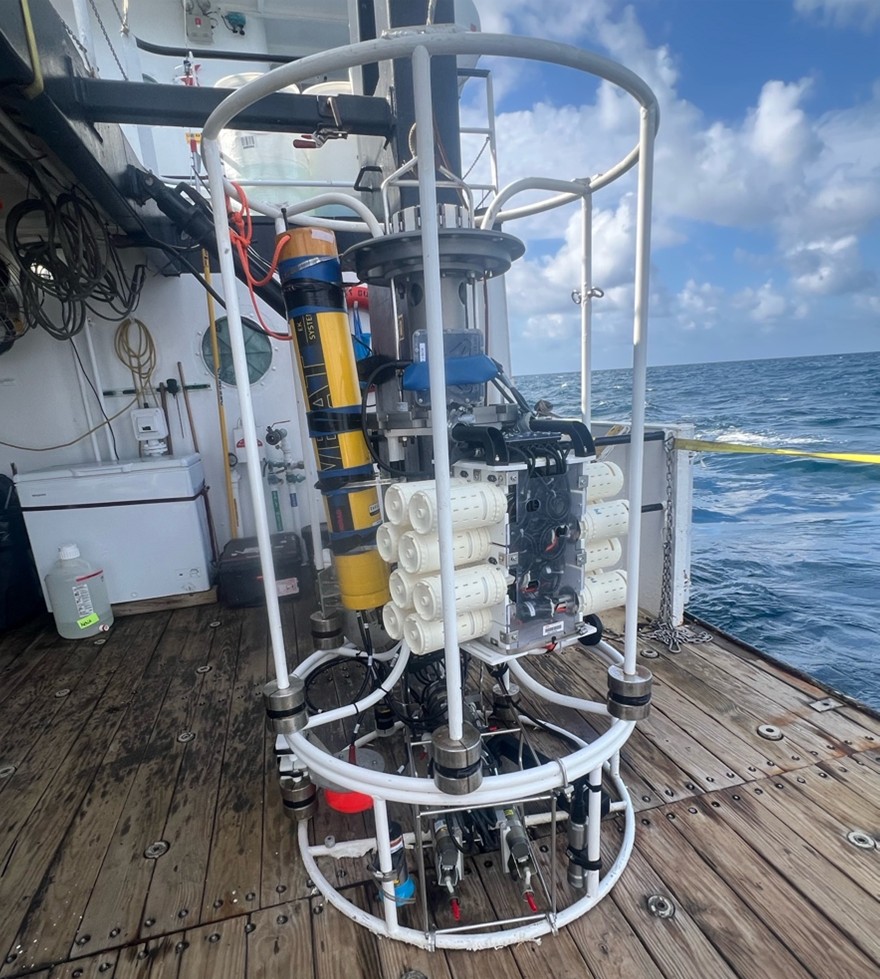
Figure 1. CTD rosette fitted a Wideband Autonomous Transceiver (WBAT) and eDNA Multipuffer used on DSB3 cruise.
This year we are bringing the Multipuffer x WBAT duo back, but also taking advantage of passive eDNA filters called metaprobes. These colorful 3D printed spheres, each simply contain a rolled segment of sterile gauze that passively captures genetic material within the water column. We’ve been having a blast attaching these passive samplers on the MOCNESS, CTD, and even on the autonomous lander for biological experiments (ALBEX) which is deployed for days at a time on the benthos! What I love most about these passive samplers is that it allows collecting eDNA in the deep sea to be more accessible without the need for costly and sensitive equipment, meaning we can deploy these on a number of different ways without much logistical and operational constraints. I am especially excited to see what organisms we can capture with these metaprobes that might have evaded the MOCNESS.
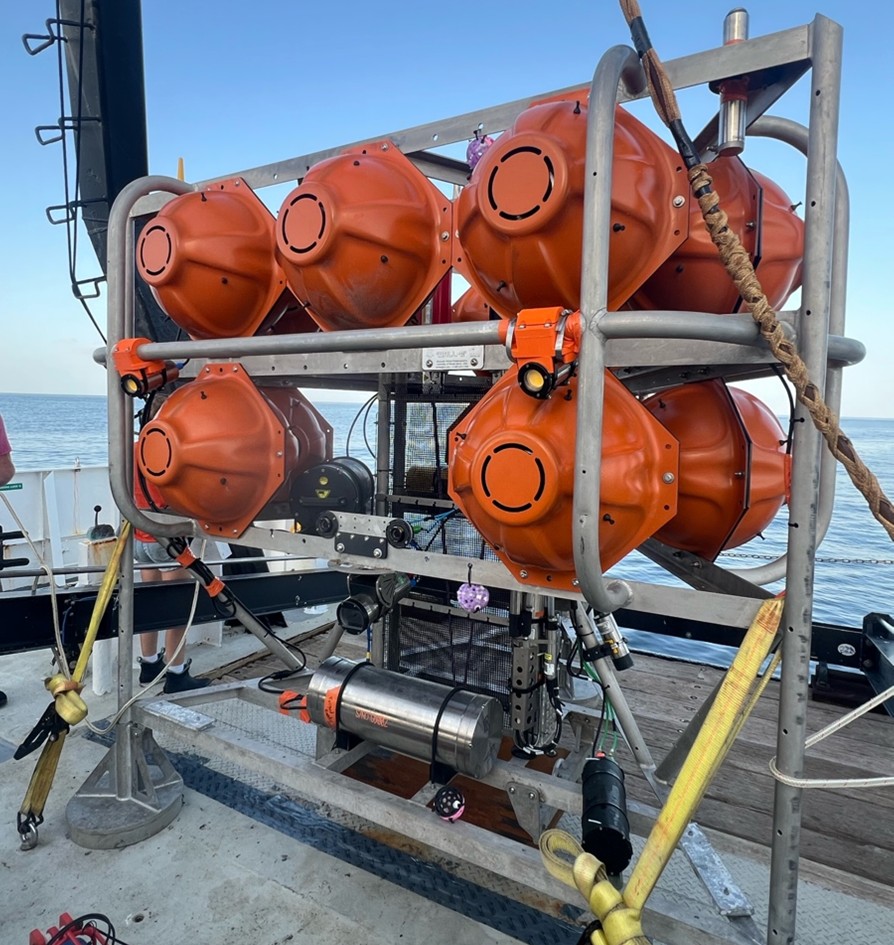
Figure 2. ALBEX lander from Davies Marecotec Lab at the University of Rhode Island with metaprobes attached.
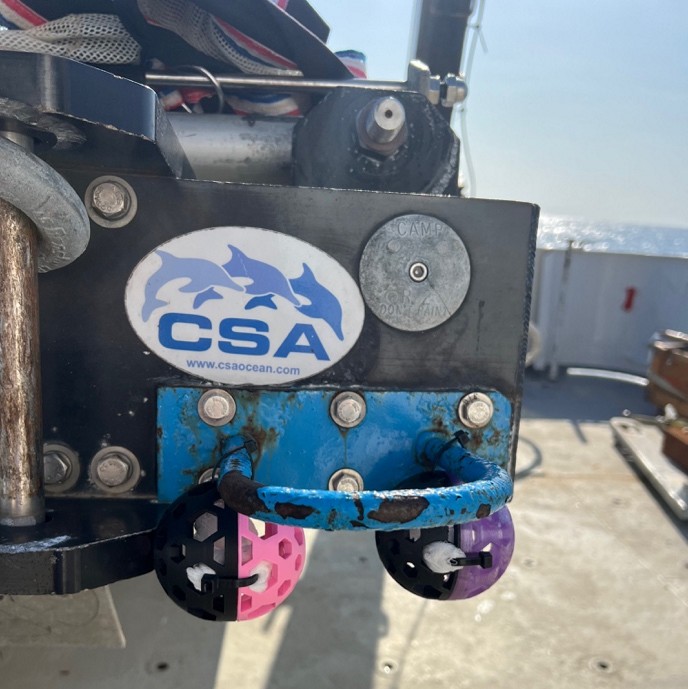
Figure 3. Metaprobes attached to the frame of the MOCNESS10.
Aside from all the eDNA fun, I also had the pleasure of celebrating my birthday this past week onboard! I woke up to the galley being decorated and we all enjoyed cake made by our chef Lawrence and deckhand Liv with dinner. I feel incredibly grateful and lucky to be able to celebrate another year doing what I love and sharing the company of such amazing crew and scientists.
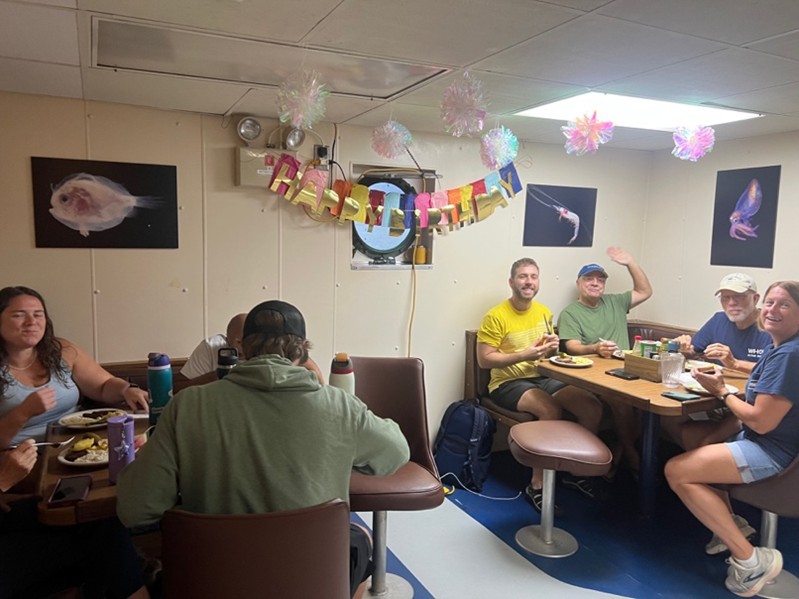
Figure 4 Science team decorating the galley for my birthday.
Until next year!! - Nina J

- 8000 N Ocean Drive
- Dania Beach, FL 33311
- 954-262-3600
- admin@deependconsortium.org