
Cruise Blog
Subscribe to our Blog
First trawl of the cruise!
Hello everyone!
This is Bianca Ruiz, a master’s student in Dr. Tracey Sutton’s lab at Nova Southeastern University, coming to you live from the R/V Point Sur as we kick off our DP10 cruise!
Day one was a success! After the crew assembled our MOC10 nets and set up the lab, it was time to start collecting samples. Our first net of the cruise was deployed on April 22nd at 2100 and retrieved on April 23rd at 0230.
The day actually begins at 0215, when all the scientists gather in the lab to prepare for the first trawl. Each PI has their own designated lab station to sort through specimens, identify them, and send the data to our computer station. That’s where my fellow students and I come in—we catalog all the samples and input the information into our database for future reference.
Since it was the first trawl of the cruise, there was a bit of a learning curve as everyone found their rhythm—especially for the new students getting familiar with their lab roles. Clear communication between stations is key to staying on task and working efficiently. I’m constantly coordinating with the other scientists and students to ensure all data entered is accurate and verified.
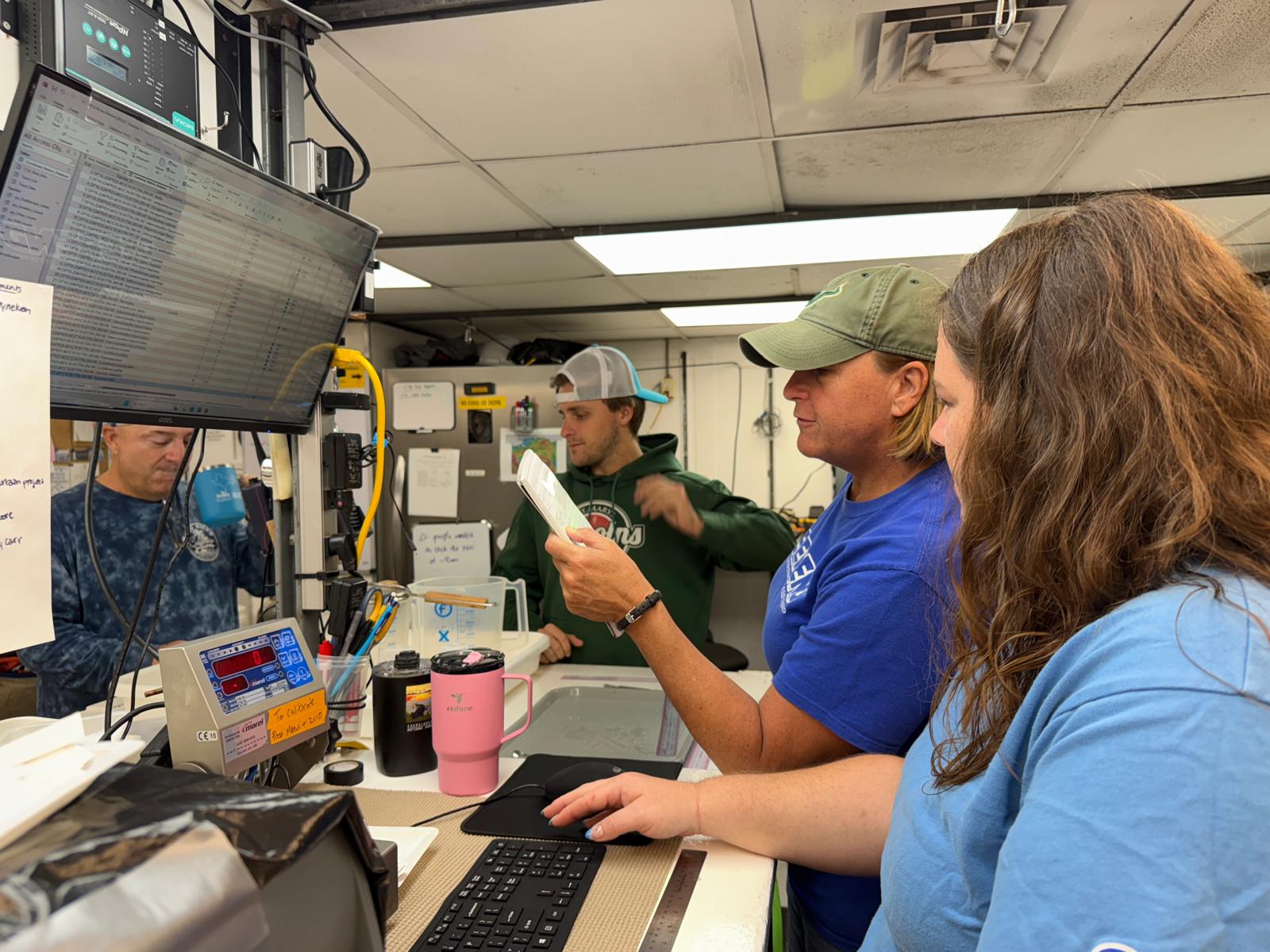
Caption: Scientist Dr. Heather Judkins discussing with our research technician, Sidney Trimble, as they work to input collected specimen data onto our database.
One of the coolest things I got to see during this trawl was a huge Anomalous lanternfish (Lampadena anomala). It had these vibrant photophores running along its ventral side—used to produce light in the deep sea. Super neat!
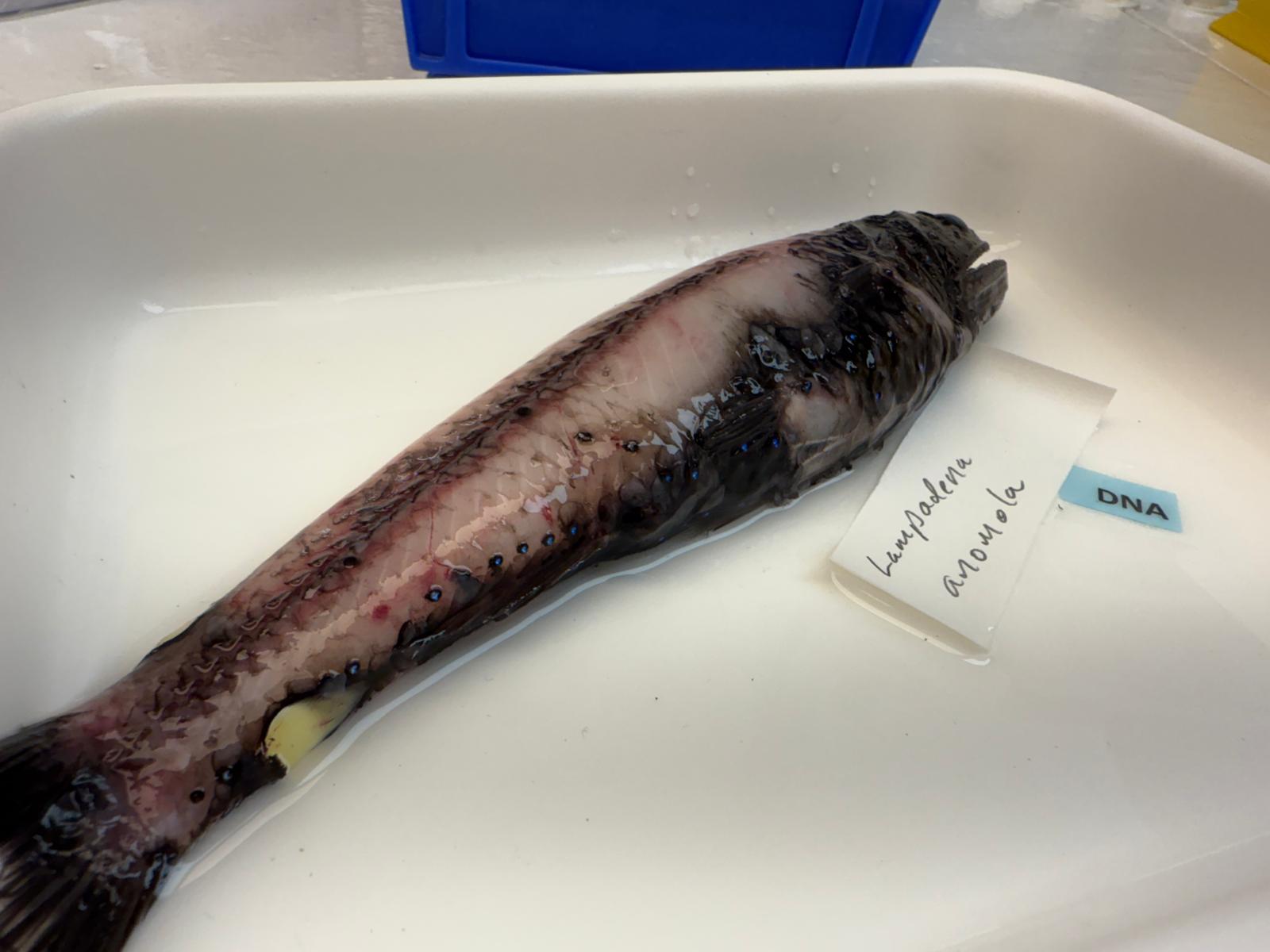
Caption: Lampadena anomala laid out diagonally on a sorting tray, label with its name and DNA tag for further processing.
I am excited to see what other interesting specimens we’ll encounter as the cruise continues, and I hope you enjoy following along with us on our DP10 adventure.
Catch you on the flip side!
- Bianca

- 8000 N Ocean Drive
- Dania Beach, FL 33311
- 954-262-3600
- admin@deependconsortium.org